A shopping cart rolls into a car door outside the Nyack Costco. Clean dent, no paint damage, barely visible unless the light hits it right. The owner figures a couple hundred bucks, maybe less.
Then the body shop quote comes back at $650. Paint matching. Panel blending. Four days without the car.
That moment — the gap between what a dent should cost and what the invoice says — is usually how New York drivers first hear about paintless dent repair. Someone mentions it could’ve been done same-day for a third of the price, and suddenly they’re googling it from the parking lot.
Dent repair costs in New York swing more than most owners expect, and the method you pick matters more than where you take the car.
What Actually Drives Dent Repair Costs in New York
It’s not the zip code. It’s the process.
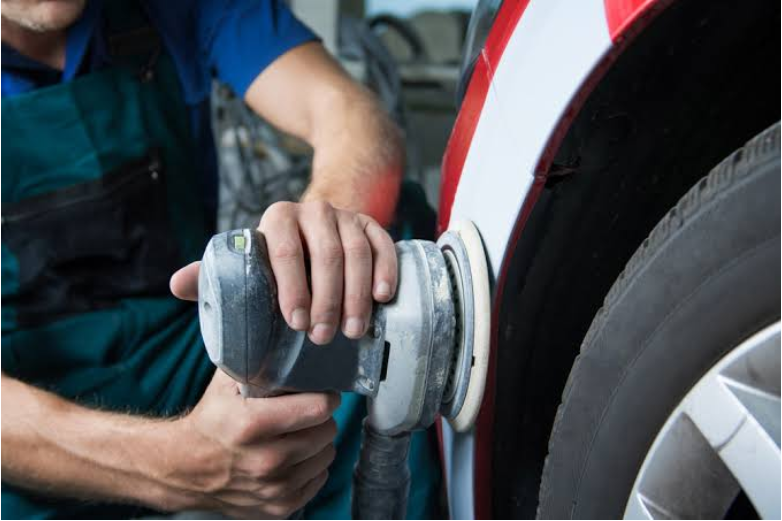
Conventional collision repair means filling the dent, sanding it smooth, priming, painting, clear-coating. Every one of those steps costs money and time. A single door panel repaint around the Hudson Valley runs $400 to $800 before anyone even discusses blending the adjacent panel — which most shops won’t skip, because an unblended repair shows up as a color mismatch the second sunlight hits it at an angle.
PDR skips almost all of that.
A technician works on the panel from the side using glue‑pulled tabs or steel rods as needed slowly pressing the metal back, toward the original factory shape. No filler. No paint booth. No three-day cure window sitting in a shop lot.
Here’s where the money actually goes in each method. Traditional repair pays for parts, filler, primer, paint, clear coat, labor, and booth time — layered on top of each other. PDR pays for one thing: technician hours, scaled against how deep the dent is and how hard the panel is to reach.
Paintless dent repair cost in NY generally lands between $75 and $150 for a single small dent. Compare that to $400-plus for the equivalent repaint, and the math isn’t close.
Why PDR Cost Varies by Dent Type, Not Just Dent Size
Bigger dent, bigger bill — that’s the assumption. It’s wrong more often than people think.
What really affects the cost of dent repair is access and how the metal reacted during the impact, not the number of square inches of damage. A large shallow dent on a flat hood panel can often be fixed quickly than a small sharp crease, near a body line. Sharp creases. Stretch the metal fibers in a way that makes them harder to push back into place without damaging the paint from the backside.
Access matters too. Doors and hoods are relatively forgiving — technicians can get behind them without much disassembly. Roof rails and panels near the pillars are a different story; sometimes a headliner has to come out just to reach the backside of the dent, and that adds labor hours fast.
And then there’s paint condition. If the clear coat cracked on impact, or if there’s any primer showing through, PDR alone won’t finish the job — you’re looking at a small touch-up paired with the dent pull, not pure PDR pricing.
A real paintless dent repair price quote comes from a technician looking at the panel in person, often with a reflection board under good light, not from a photo texted over.
Hail is where this logic gets tested at scale. A spring storm rolls through Rockland County and leaves a hood with a dozen or more shallow dents. First instinct for a lot of owners: this means a new hood, a big insurance claim, a rental car for a week. Usually that instinct is wrong. If the clear coat never broke and the metal never tore — which is the case in most hail strikes — that whole hood is a PDR job, not a parts-replacement job.
Running the Numbers: Dent Repair Cost Comparison
Put PDR and conventional repair side by side and the gap stops being abstract.
A single-panel PDR repair typically costs $75 to $250 and finishes the same day. The equivalent repaint runs $400 to $900 and eats three to five days once you factor in paint, primer, and cure time. Route it through insurance instead, and the total often climbs past $500 before labor is even counted — deductibles have a way of doing that.
Three numbers worth remembering:
- Paintless dent repair: roughly 75–250 per panel, done same day to next day, no paint booth involved
- Traditional repaint: roughly 400–900 per panel, three to five days, full paint and blend process
- Insurance-routed repair: $500 and up depending on the policy, plus however long claims processing adds on top
Dollar savings get the attention, but the time savings matter just as much in practice. A conventional repair parks the car for days and usually means a rental. PDR often wraps up in a few hours — which is a big part of why it’s become the first call for parking-lot dings and minor collision damage across the Lower Hudson Valley.
PDR pricing New York-wide tracks pretty closely with regional labor rates — Westchester and Rockland run higher than shops further upstate. Even with that premium baked in, PDR still comes in well under traditional repair, because there’s no paint material or booth time to pay for.
When PDR Isn’t the Right Fit
PDR isn’t magic. A technician who’s worth trusting will tell you that upfront instead of trying to force a fix that won’t hold.
Paint damage is the first disqualifier. Cracked clear coat, chipped paint down to bare metal — that area needs conventional repair no matter how shallow the dent underneath is, because exposed metal starts corroding fast, especially with New York winters and road salt in the mix.
Sharp creases near body edges can also push past what PDR tools can correct without risking the paint cracking from the inside out. Same goes for dents that land on top of old bodywork — filler from a prior repair doesn’t flex the way factory metal does, and PDR techniques can behave unpredictably there.
Most of the time, this gets sorted out in a five-minute inspection. Shops that handle both collision work and PDR — Spectrum Auto Inc. among them — can usually tell a driver on the spot whether the damage is a clean PDR job or whether it needs a hybrid approach: dent pull plus a small paint touch-up.
Where New York Drivers Can Get a Straight Answer on PDR Pricing
The decision between PDR and conventional bodywork really comes down to one honest inspection — not a guessing game based on how bad the dent looks from across the parking lot.
Shops that treat PDR as a core service, rather than an afterthought bolted onto collision work, tend to give the most accurate read on which method actually fits the damage in front of them.
Spectrum Auto Inc., working out of West Nyack and serving Montrose, Cortlandt, and the broader Rockland County area, is built around that dual capability — full collision repair alongside dedicated PDR, with ADAS calibration knowledge on hand for newer vehicles where sensor-equipped panels complicate things. For a New York driver weighing cost against how long the car’s going to be out of commission, a shop willing to recommend the cheaper, faster fix — instead of defaulting to a full repaint — is worth the extra five minutes it takes to get a second opinion.
FAQs
- Is paintless dent repair really cheaper than a body shop repaint?
Usually yes. A single PDR job typically runs $75 to $250 compared to $400 to $900 for a repaint on the same panel. The difference comes from skipping paint materials, booth time and drying time entirely. That means work, less cost and faster results. PDR is a choice when you don’t need a full repaint. It saves money and time. It’s kind of a relief to not have to deal with the mess and long wait. PDR fixes dents, without painting so it’s quicker and often cheaper.
- Can PDR fix hail damage on an entire hood or roof?
In most cases. As long as the clear coat didn’t crack and the metal didn’t tear, multiple shallow hail dents across a panel are often good PDR candidates — even when the surface looks rough at first glance.
- How long does a typical PDR job take in New York?
Most single-panel repairs wrap up same-day, often in a few hours. Bigger jobs — hail damage spread across several panels, for instance — can take a full day depending on access and how many dents there are.
- Does PDR work on all types of dents?
No. It’s best suited to shallow or moderate dents with no paint damage. Sharp creases, cracked clear coat, or dents sitting on top of old bodywork repairs usually call for a conventional or hybrid fix instead.